
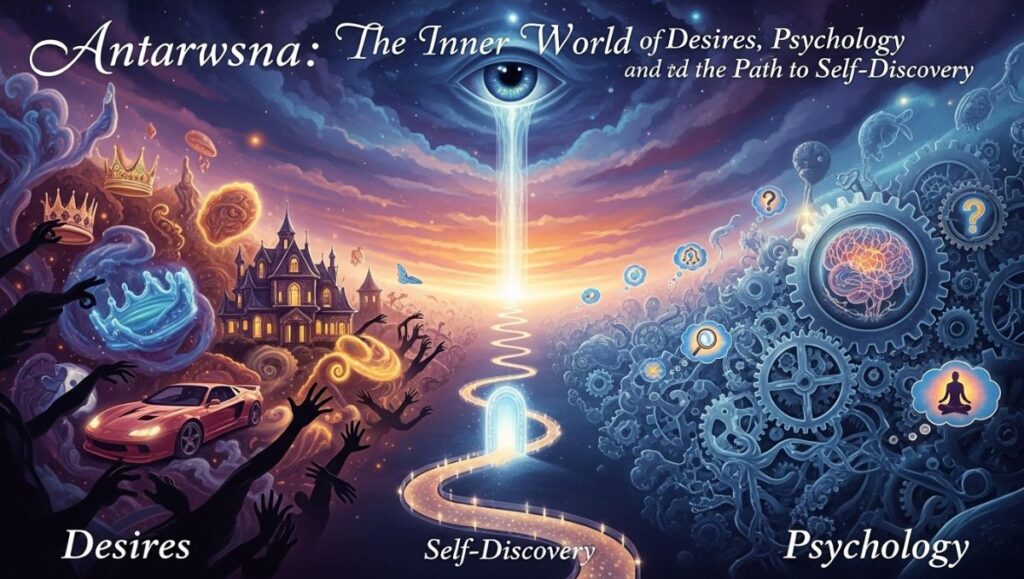
Within every human being exists a quiet storm — a realm of feelings, impulses, and longings that shape who we are. This inner landscape is what the concept of Antarvwsna seeks to illuminate.
Derived from the Sanskrit-inspired term for inner desire or yearning, Antarvwsna represents the intricate web of human emotions and the psychological forces that drive them. It is not merely about wanting; it is about understanding why we want, how desire shapes identity, and what happens when we align or resist it.
In the modern world, where external validation often overshadows inner reflection, the idea of Antarvwsna offers a return to authenticity — a way to rediscover the power and purpose hidden within our desires.
The Meaning and Origins of Antarvwsna
The term Antarvwsna can be broken down conceptually into two parts:
-
Antar meaning “within” or “inner,” and
-
Vwsna representing “desire,” “longing,” or “urge.”
Together, Antarvwsna signifies inner desire — the quiet call of the subconscious that influences thought, emotion, and behavior.
In psychological and spiritual traditions, similar ideas appear across cultures. From the Hindu concept of Vāsanā (latent tendencies formed by past experiences) to the Freudian unconscious drives, the thread remains constant: our inner desires define our outer lives.
Antarvwsna, therefore, can be viewed as the intersection of psychology, philosophy, and spirituality — a bridge connecting the mind’s unseen depths to conscious self-awareness.
The Psychology of Desire: What Antarvwsna Reveals About the Mind
At its core, Antarvwsna challenges us to confront the question: What truly drives us?
Modern psychology tells us that human behavior is rarely random. Every choice, attraction, or aversion stems from layers of internal motivation — some conscious, others buried deep in the subconscious.
1. The Layers of Desire
Desires can be divided into three broad categories:
-
Basic Needs – survival instincts such as hunger, safety, and comfort.
-
Aspirational Desires – goals tied to identity, success, and belonging.
-
Transcendent Desires – the yearning for meaning, purpose, and spiritual fulfillment.
Antarvwsna encompasses all these layers, viewing them as expressions of the same internal energy manifesting in different forms. Understanding them requires introspection and honesty — the courage to face one’s inner truth.
2. The Shadow of Unacknowledged Desire
When desires remain unacknowledged or suppressed, they often transform into frustration, anxiety, or restlessness. Psychology calls this repression; spirituality calls it misalignment.
Antarvwsna invites us to observe rather than judge these hidden feelings — to treat them as messages from the unconscious mind, guiding us toward balance and self-awareness.
Antarvwsna and the Human Journey of Self-Discovery
The exploration of Antarvwsna is essentially a journey inward — a process of uncovering the authentic self beneath layers of conditioning, expectation, and fear.
1. Awareness as the First Step
The first step toward self-discovery is awareness. By pausing to observe our emotions, triggers, and patterns, we begin to see how desires shape our reality.
Practices such as mindfulness, journaling, or meditation help bring Antarvwsna into consciousness — turning vague impulses into clear insights.
2. Acceptance Without Judgment
True self-discovery requires compassion. Instead of resisting uncomfortable desires or labeling them as wrong, Antarvwsna teaches acceptance. Each longing, no matter how trivial or intense, reveals something about who we are and what we seek.
By accepting desire as natural, we free ourselves from guilt and move closer to inner clarity.
3. Integration: Aligning Inner Desires With Outer Action
The ultimate goal of Antarvwsna is not detachment from desire, but integration — learning to act from desires that align with our higher values and authentic purpose.
When our actions reflect our true inner needs rather than external pressures, life gains coherence and meaning. We move from chaos to flow, from confusion to direction.
The Spiritual Dimension of Antarvwsna
Beyond psychology, Antarvwsna carries a profound spiritual significance. Many ancient traditions viewed desire not as an obstacle, but as a pathway to enlightenment when understood correctly.
In Eastern philosophy, desires are seen as energies that can be transformed. When driven by ignorance, they bind us to suffering. When guided by awareness, they propel us toward growth and awakening.
Antarvwsna teaches that our desires are not enemies — they are teachers. By listening to them with mindfulness, we can uncover the deeper truths of our soul’s journey.
Modern Relevance: Antarvwsna in the Age of Distraction
In the 21st century, our relationship with desire has become more complicated than ever. Advertising, social media, and digital culture constantly manufacture artificial wants, blurring the line between authentic longing and external influence.
Antarvwsna stands as an antidote to this culture of consumption. It encourages individuals to ask:
-
Is this something I truly desire, or something I’ve been told to want?
-
Does this bring me closer to fulfillment, or further from it?
In a society that prizes productivity over presence, reconnecting with one’s Antarvwsna means reclaiming the right to define one’s own happiness.
The Relationship Between Antarvwsna and Emotional Intelligence
Emotional intelligence — the ability to recognize, understand, and manage emotions — is deeply tied to Antarvwsna.
By exploring inner desires, individuals develop self-awareness and empathy. They learn that desires are not random but reflections of emotional needs — for love, security, validation, or freedom.
When we honor these needs with maturity, we transform desire into creative energy rather than conflict. Antarvwsna thus becomes a form of emotional mastery, where desire and awareness coexist harmoniously.
Antarvwsna and Creativity: Desire as a Source of Inspiration
Many of humanity’s greatest achievements — art, invention, and discovery — are born from desire.
Antarvwsna recognizes desire as the root of creative power. When channeled consciously, it fuels imagination and purpose. When ignored, it festers as longing or regret.
Artists, writers, and innovators often speak of an “inner fire” — a restless impulse to create, express, and give form to the unseen. That fire is Antarvwsna in motion: the transformation of desire into expression.
By embracing their Antarvwsna, creative individuals learn to listen deeply to their intuition, transforming emotional depth into art and innovation.
Overcoming the Illusions of Desire
While Antarvwsna celebrates the importance of desire, it also warns against attachment — the tendency to identify with every passing want.
Self-discovery means learning to distinguish between fleeting cravings and core desires.
-
Cravings arise from insecurity or social conditioning.
-
Core desires emerge from the soul’s authentic voice — what truly nourishes us.
The art of living, according to Antarvwsna, lies in recognizing the difference. When we pursue desires that resonate with our inner truth, fulfillment follows naturally.
The Practice of Antarvwsna: Turning Reflection Into Growth
To live according to Antarvwsna is to make introspection a daily habit. Here are a few practices inspired by this philosophy:
-
Journaling Desires:
Write about what you want and why. Trace your desires back to their roots — fear, love, or curiosity. Understanding the “why” often changes the “what.” -
Mindful Observation:
When a strong emotion arises, pause. Instead of reacting, observe it. Ask, What desire is this emotion protecting or revealing? -
Visualization:
Imagine what fulfillment feels like, not just looks like. Visualization aligns the subconscious mind with authentic aspirations. -
Detachment Practice:
Learn to let go of desires that no longer serve your growth. This clears mental space for more aligned intentions to emerge.
Through such practices, Antarvwsna transforms from a concept into a lived experience — a guide for emotional and spiritual evolution.
Conclusion
Antarvwsna is more than an abstract idea; it’s a mirror that reflects who we are beneath the surface. It asks us to meet our desires with curiosity rather than judgment, to understand them not as distractions but as directions.
In exploring our Antarvwsna, we learn that self-discovery is not about rejecting desire but about refining it — turning restless longing into meaningful pursuit.
When we honor the truth within our desires, we align with our most authentic selves. That alignment is the essence of fulfillment, creativity, and peace — the very heart of what it means to live consciously.