
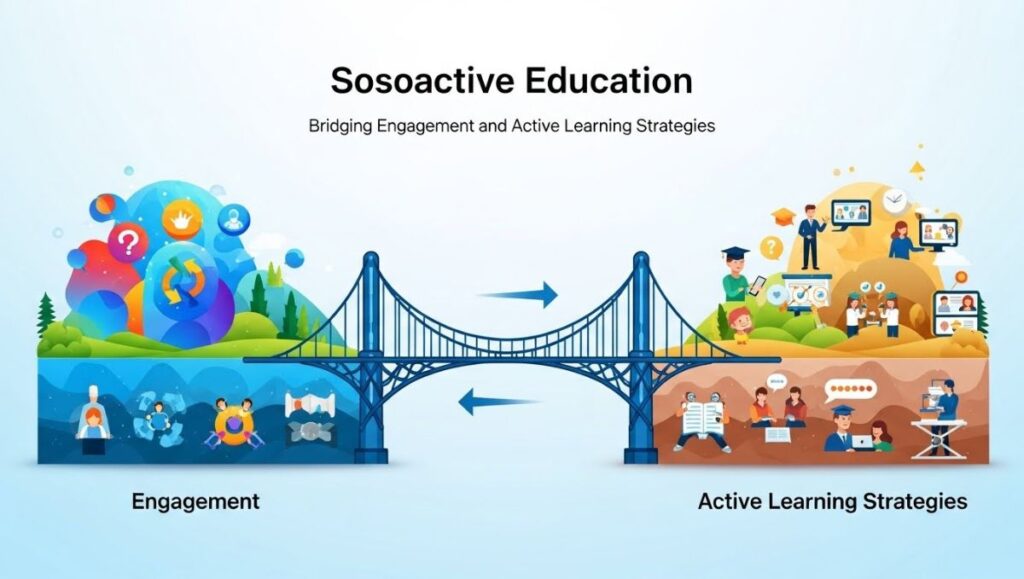
Education is evolving, and at the forefront of this transformation is Sosoactive Education. Imagine a classroom where students don’t just sit and listen but actively engage in their learning journey. This innovative approach combines engagement with active learning strategies to create an environment that resonates with today’s learners. As traditional methods fade, educators are seeking fresh ways to inspire and motivate students. Enter Sosoactive Education—a framework designed not only to enhance academic performance but also to foster critical thinking, collaboration, and creativity among students. Let’s delve deeper into what makes Sosoactive Education a game changer in modern teaching practices!
What is Sosoactive Education?
Sosoactive Education is an innovative pedagogical approach that emphasizes active participation and engagement in the learning process. Unlike traditional methods, which often prioritize rote memorization, this model encourages students to take ownership of their education.
At its core, Sosoactive Education integrates various interactive techniques. These can include collaborative projects, discussions, and hands-on activities that stimulate curiosity and critical thinking. The goal is to create a dynamic classroom environment where learners are not passive recipients of information but active contributors.
This method recognizes the diverse ways students absorb knowledge. By incorporating technology and real-world applications into lessons, educators can cater to different learning styles and preferences. Sosoactive Education ultimately aims to bridge the gap between theoretical concepts and practical application, making learning more relevant and exciting for today’s youth.
The Importance of Engagement and Active Learning in Education
Engagement and active learning are vital components of modern education. They transform passive recipients into enthusiastic participants. When students engage with the material, their understanding deepens.
Active learning strategies encourage collaboration and critical thinking. This approach allows learners to explore concepts through discussion, problem-solving, and hands-on activities. As a result, knowledge becomes more meaningful.
Moreover, engaged students show higher retention rates. Active involvement stimulates curiosity and fosters a love for learning that lasts beyond the classroom walls.
Teachers who utilize these methods can create an inclusive environment where every voice matters. This interaction builds confidence among students while promoting diverse perspectives.
Prioritizing engagement creates a dynamic atmosphere conducive to innovation and creativity in education settings.
How Sosoactive Education Implements Engagement and Active Learning Strategies
Sosoactive Education brings a dynamic approach to the classroom. It leverages technology to create interactive learning experiences that capture students’ attention. By integrating tools like live polls and collaborative platforms, it encourages real-time participation.
Students engage more deeply when they can express their thoughts and ideas freely. This active involvement leads to better retention of information and fosters critical thinking skills.
Moreover, Sosoactive Education emphasizes project-based learning. Here, students work on tangible projects that relate directly to the curriculum. They collaborate in teams, enhancing their communication skills while solving real-world problems.
Feedback is another essential element in this model. Teachers provide immediate responses during activities, allowing for adjustments on the fly. This creates an adaptive learning environment where every student feels valued and empowered to contribute actively.
Case Studies: Schools and Universities Implementing Sosoactive Education
Several institutions have embraced Sosoactive Education to enhance their teaching methods. For example, a high school in Texas launched an initiative integrating real-time feedback through digital platforms. Students collaborate on projects, allowing them to take ownership of their learning.
In another instance, a university in California implemented interactive workshops that blend theoretical and practical knowledge. Faculty members reported higher student participation and enthusiasm during lectures.
A community college in New York took it further by incorporating gamification elements into its curriculum. Students engage with course material in fun ways while building critical thinking skills.
These case studies illustrate the versatility of Sosoactive Education across various educational settings. Each institution customized strategies to fit their unique needs yet shared a common goal: fostering active engagement among students. The results are promising, showcasing improved academic performance and enhanced classroom dynamics.
Benefits of Sosoactive Education for Students and Teachers
Sosoactive Education brings a wave of benefits for both students and teachers. For students, it fosters deeper understanding through interaction and collaboration. Active participation allows them to grasp complex concepts more effectively than traditional methods.
Teachers also reap rewards from this approach. It transforms the classroom dynamic, shifting their role from mere lecturers to facilitators of learning. This shift promotes creativity in lesson planning and encourages innovative teaching techniques.
Moreover, Sosoactive Education enhances student motivation. Engaged learners are more likely to take ownership of their education, leading to improved academic performance.
The feedback loop created by active engagement enables teachers to assess comprehension in real time. They can adjust strategies on the fly based on student responses, ensuring that no one is left behind.
Sosoactive Education cultivates a vibrant educational environment where curiosity thrives and relationships flourish between educators and learners alike.
Challenges and Criticisms of Sosoactive Education
Sosoactive Education, while innovative, faces its share of challenges. One significant concern is the reliance on technology. In some classrooms, access to devices and reliable internet can be inconsistent. This disparity impacts student participation.
Another criticism revolves around implementation complexity. Teachers may feel overwhelmed by adapting traditional lesson plans to fit Sosoactive methods. Professional development programs can help but require time and resources many educators lack.
Additionally, some skeptics argue that engagement doesn’t always equate to effective learning outcomes. Just because students are active does not guarantee they grasp concepts deeply.
There’s also the risk of distraction in a highly interactive environment. Students might focus more on engaging with tools than absorbing material.
Measuring success in this context can be tricky. Standardized assessments often don’t reflect the benefits of active learning strategies utilized within Sosoactive frameworks.
How to Incorporate Sosoactive Education in the Classroom
Incorporating Sosoactive Education in the classroom begins with fostering a collaborative environment. Encourage group discussions where students can share ideas and learn from each other.
Utilize technology to create interactive lessons. Tools like quizzes, polls, or educational games can transform passive learning into active engagement.
Design hands-on activities that relate directly to your curriculum. Projects that require problem-solving allow students to take ownership of their learning experiences.
Regularly seek feedback from your students about what engages them most. This will help tailor your approach and make adjustments as needed.
Integrate reflection sessions after activities. These moments give students a chance to articulate what they’ve learned and how they felt during the process, deepening their understanding.
Future Prospects of Sosoactive Education
The future of Sosoactive Education looks promising. As educational landscapes continue to evolve, the demand for dynamic and engaging learning environments is on the rise. With advancements in technology and a growing understanding of diverse learning styles, more institutions are expected to adopt Sosoactive principles.
Innovative tools and platforms will enhance active participation among students. Virtual reality, gamification, and collaborative online spaces can further bridge gaps between educators and learners. These elements not only make learning enjoyable but also help solidify critical thinking skills.
As educational stakeholders recognize the power of engagement in academic success, we may see an increase in professional development programs focusing on Sosoactive strategies for teachers. This could lead to better-prepared educators who feel empowered to create immersive experiences that resonate with their students.
Moreover, as research continues to surface about the benefits of engaged learning—especially regarding retention rates—there is potential for broader acceptance within traditional curricula across various education systems worldwide.
Sosoactive Education has already begun reshaping classrooms today; its influence will likely expand well into tomorrow’s educational practices. The journey towards a more interactive and effective approach seems just beginning.